
When Your Marketing Isn’t Working (It Might Not Be Marketing)
Sometimes even I get confused.
What exactly is marketing? And how is it different from public relations, advertising, branding, or customer experience?
If you’re interviewed on a podcast and talk about your business, that’s public relations. If you pay for LinkedIn ads, that’s advertising. If a client has a great experience and refers you, that’s customer experience.
But aren’t all of these… marketing?
Yes. And no.
A podcast interview might be PR. But it’s also branding because of how you tell your story. And it’s marketing because you’re building trust. One activity can play multiple roles at once.
It’s even blurrier now. PR used to mean earned media. You pitched, you were featured. Now sometimes you pay for placement, which starts to look a lot like advertising. The lines aren’t clean anymore. But understanding the roles still matters.
Most of the coaching clients I work with come to me frustrated that their marketing isn’t working. And they’re usually right. It isn’t working. But the reason is often different from what they think.
They blame algorithms. Instagram changed. LinkedIn reach dropped. Email open rates aren’t what they were. Those things may be true. But they’re rarely the root issue.
Often, they’re trying to fix the wrong problem.
They say they need better marketing. But sometimes it’s unclear branding. Sometimes it’s inconsistent communication. Sometimes it’s advertising trying to carry too much weight. Sometimes it’s a client experience that doesn’t quite match the promise being made publicly.
When everything gets labelled marketing, we try to fix everything. New content. New ads. New visuals. And still feel stuck.
Here’s how I think about it.
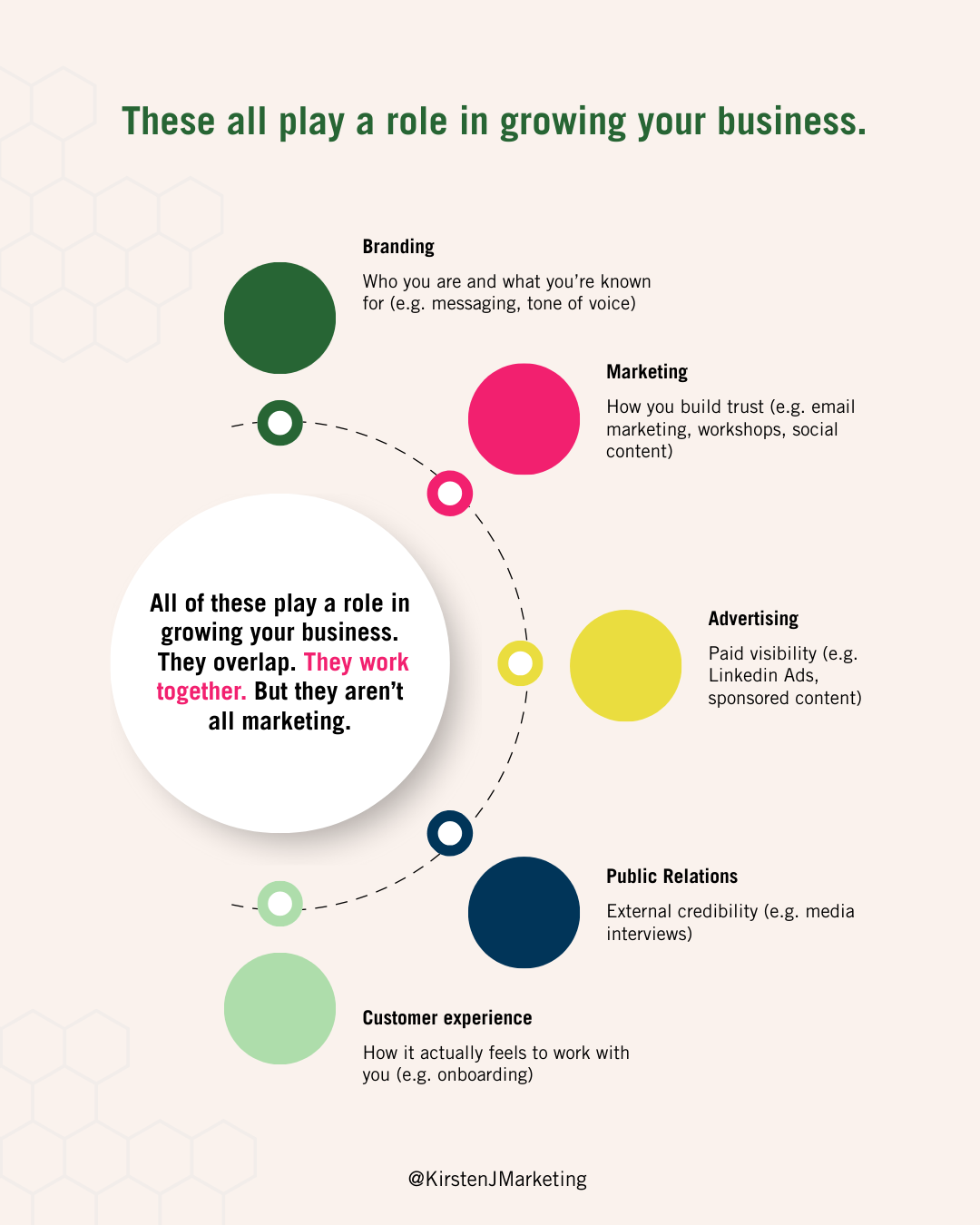
These areas overlap, but they’re not interchangeable. Each one plays a different role in how your business grows.
• Branding is who you are and how people experience you.
Example: You decide you want to be known for calm, strategic guidance instead of fast growth tactics. That choice shapes your messaging and how you show up. That’s branding.
• Marketing is how you communicate that consistently over time.
Example: You send a weekly newsletter sharing thoughtful insights. Over time, people begin to trust your thinking. That’s marketing.
• Advertising is paid visibility.
Example: You run LinkedIn ads promoting your coaching offer. If the message is clear, the ads accelerate growth. If it’s unclear, they amplify confusion.
• Public relations builds credibility through external platforms. Sometimes earned. Sometimes paid.
Example: You’re featured on a podcast or in an online publication where someone else introduces you and your expertise. That borrowed credibility is PR.
• Customer experience is how it actually feels to work with you.
Example: A new client receives clear onboarding, thoughtful communication, and strong follow-through. They feel supported and refer you. That’s customer experience driving growth.
The overlap is natural. A podcast can be PR, branding, and marketing at once. A paid feature can blur into advertising. A strong client experience turns into word-of-mouth marketing. It’s not about perfect boxes. It’s about knowing what role something is playing right now.
Because you can’t advertise your way out of unclear branding. And you can’t rely on visibility, paid or earned, if the experience doesn’t hold up. When one part is weak, the others work harder.
This is also where confusion becomes expensive.
If you don’t know which area needs attention, it’s easy to hire the wrong support. You bring in an ads specialist, but your positioning isn’t clear. You invest in PR, but your messaging is still fuzzy. You refresh your visuals before deciding what you want to be known for.
The experts aren’t the problem. They’re just solving a different problem.
You don’t need every specialist at once. You need clarity on which gap you’re actually trying to close. Then you can bring in the right support at the right time.
Instead of asking, “How do I fix my marketing?” try asking, “What am I actually trying to fix?”
Clarity? Consistency? Visibility? Credibility? Experience?
When you name the real issue, the next step becomes clearer. You stop reacting. You start making thoughtful decisions.
If you’re unsure where the gap is, that’s often where I come in. We zoom out, look at the full picture, and decide what needs strengthening right now. Calmly. Without blaming the algorithm. And if I’m the right fit for what you need, I’ll let you know. And if I’m not I’ll refer you to who is.